When Peace is Broken: How Stress Rewires Your Gut (In a Matter of Hours)
Stress isn't just in your head—it reverberates directly in your belly. Discover how cortisol alters your gut flora within hours, why we crave comfort foods, and simple ways to soothe your nervous system and microbiome.

In Part 1 of our microbiome series, we introduced the internal "monastery" living inside your digestive tract—trillions of microscopic "monks" working in quiet harmony to train your immune system, synthesize vitamins, and maintain the integrity of your intestinal walls.
When life is calm, this ecosystem thrives. But what happens when the surrounding environment becomes chaotic?
Whether it is a looming deadline, a difficult conversation, or chronic daily overwhelm, your body does not distinguish between a physical threat and psychological strain. To your nervous system, stress is a alarm signal—and the very first place that alarm reverberates is inside your gut.
The Vicious Cycle: How Stress Shifts Appetite and Neurochemistry
When your brain perceives a threat, it activates the Hypothalamic-Pituitary-Adrenal (HPA) axis, flooding your system with stress hormones like cortisol and adrenaline. While this response is designed to help you survive acute danger, chronic stress alters the delicate chemical signals governing hunger and satiety:
- Ghrelin (The "Go" Signal): Elevated cortisol levels stimulate the production of ghrelin, the hormone that signals hunger to your brain. This keeps your appetite artificially elevated, even if your body does not require additional caloric energy.
- Leptin Resistance (The Silenced "Stop" Signal): Under prolonged stress, your brain becomes less responsive to leptin, the hormone responsible for telling you that you are full.
At the same time, cortisol drives intense cravings for hyper-palatable foods—items dense in refined carbohydrates, sugars, and industrial fats. From an evolutionary standpoint, your brain thinks it needs fast, high-calorie fuel to run away from a predator. In the modern world, however, those calories simply land in an already stressed digestive system.
Under the Microscope: Microbial Shifts Within Hours
You might assume that altering your microbiome requires weeks of a poor diet, but stress can reshape your internal ecosystem with remarkable speed—often within just a few hours.
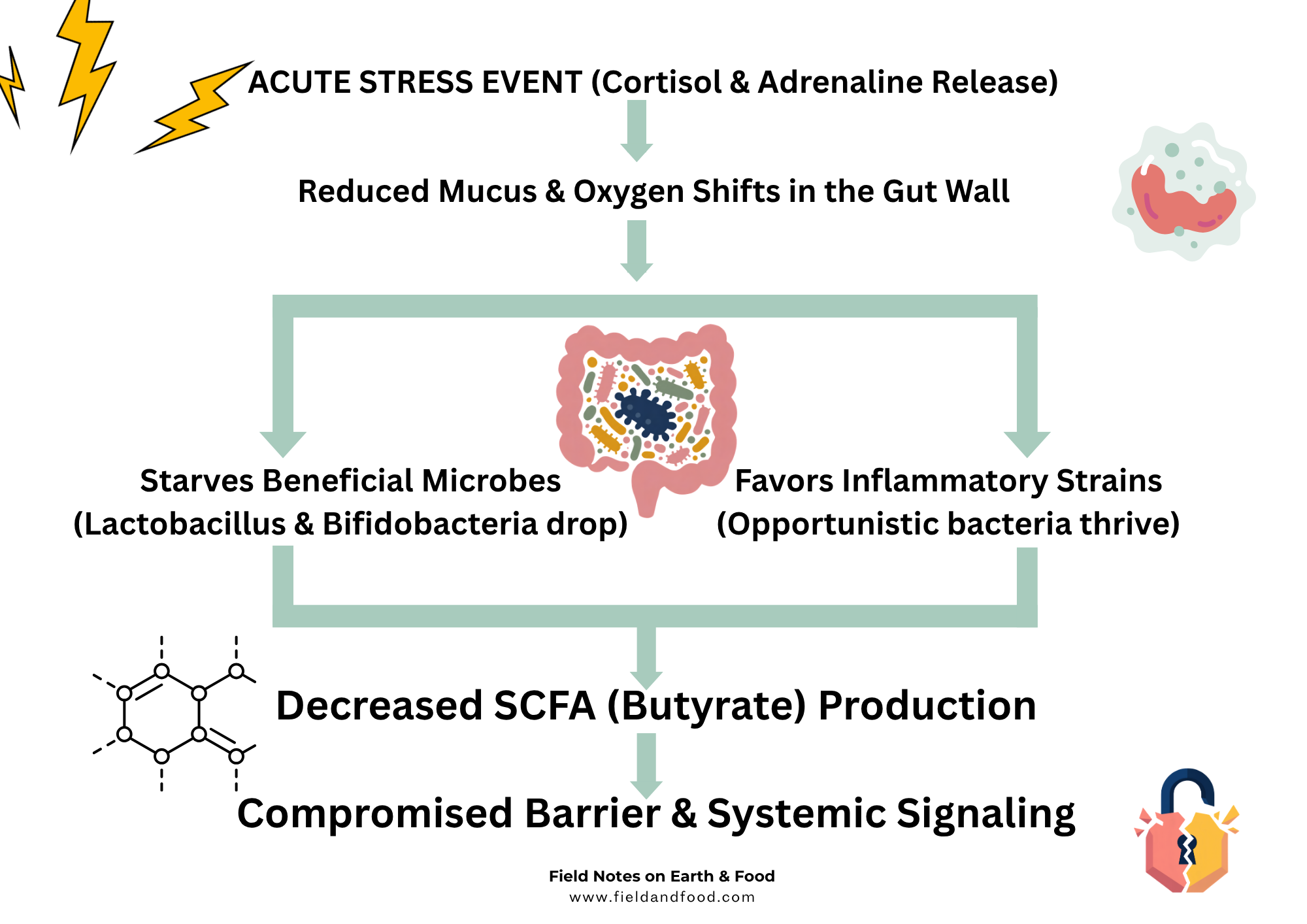
When stress hormones enter the gut via the bloodstream, they alter the physical environment in several ways:
- Reduced Blood Flow & Mucus Depletion: Adrenaline diverts blood away from digestion toward your muscles, decreasing the thickness of the protective mucus layer lining your intestines.
- Oxygen Levels Rise: A healthy gut lumen is an anaerobic (oxygen-free) zone where beneficial bacteria thrive. Stress-induced changes increase localized oxygen levels, effectively poisoning beneficial species like Lactobacillus and Bifidobacteria.
- Pathogenic Advantage: Certain opportunistic bacterial species possess chemical receptors that act like antennae for stress hormones. When exposed to adrenaline, these strains grow rapidly and become more aggressive at adhering to gut tissue.
What does this look like under the microscope?
In a calm gut, you observe a dense, highly diverse carpet of varied bacterial shapes, anchored safely within a thick layer of mucus. Under acute stress, that mucus layer thins dramatically. Within hours, the overall species count drops, diversity shrinks, and opportunistic, inflammatory strains begin to dominate the landscape—drastically reducing the production of protective Short-Chain Fatty Acids (SCFAs) like butyrate.
The Feedback Loop: From Gut to Mood
This microbial disruption does not stay contained in the belly. Because your gut microbes produce or stimulate key neurotransmitters, stress-induced dysbiosis sends negative signals right back up to the brain via the Vagus Nerve.
- Serotonin: Roughly 90% of your body’s serotonin (which regulates mood, sleep, and digestion) is produced in the gastrointestinal tract. Beneficial microbes influence the synthesis of serotonin precursors. When stress starves these microbes, serotonin pathways can become dysregulated.
- GABA: Specific strains of Lactobacillus and Bifidobacteria produce GABA (gamma-aminobutyric acid), the brain's primary calming neurotransmitter. As stress depletes these strains, GABA production drops, leaving your nervous system more susceptible to anxiety, restlessness, and mood volatility.
This creates a self-reinforcing loop: Mental stress disrupts the gut microbiome, and a disrupted microbiome leaves the brain more vulnerable to stress.
The Comfort Food Paradox: Temporary Solace vs. Long-Term Stress
Why do we reach for a box of donuts or a chocolate bar when we feel down?
When you consume highly refined sugars and fats, special sensory cells in your upper intestine (known as neuropod cells) detect these dense nutrients and immediately send high-speed signals up the vagus nerve directly to your brain's reward centers. This gut-driven signal triggers a rapid surge of dopamine—the chemical messenger of reward and motivation—providing genuine, temporary neurological relief by dampening the acute stress response.
However, there is a fundamental difference between industrial "comfort" foods and traditional home-cooked comfort:
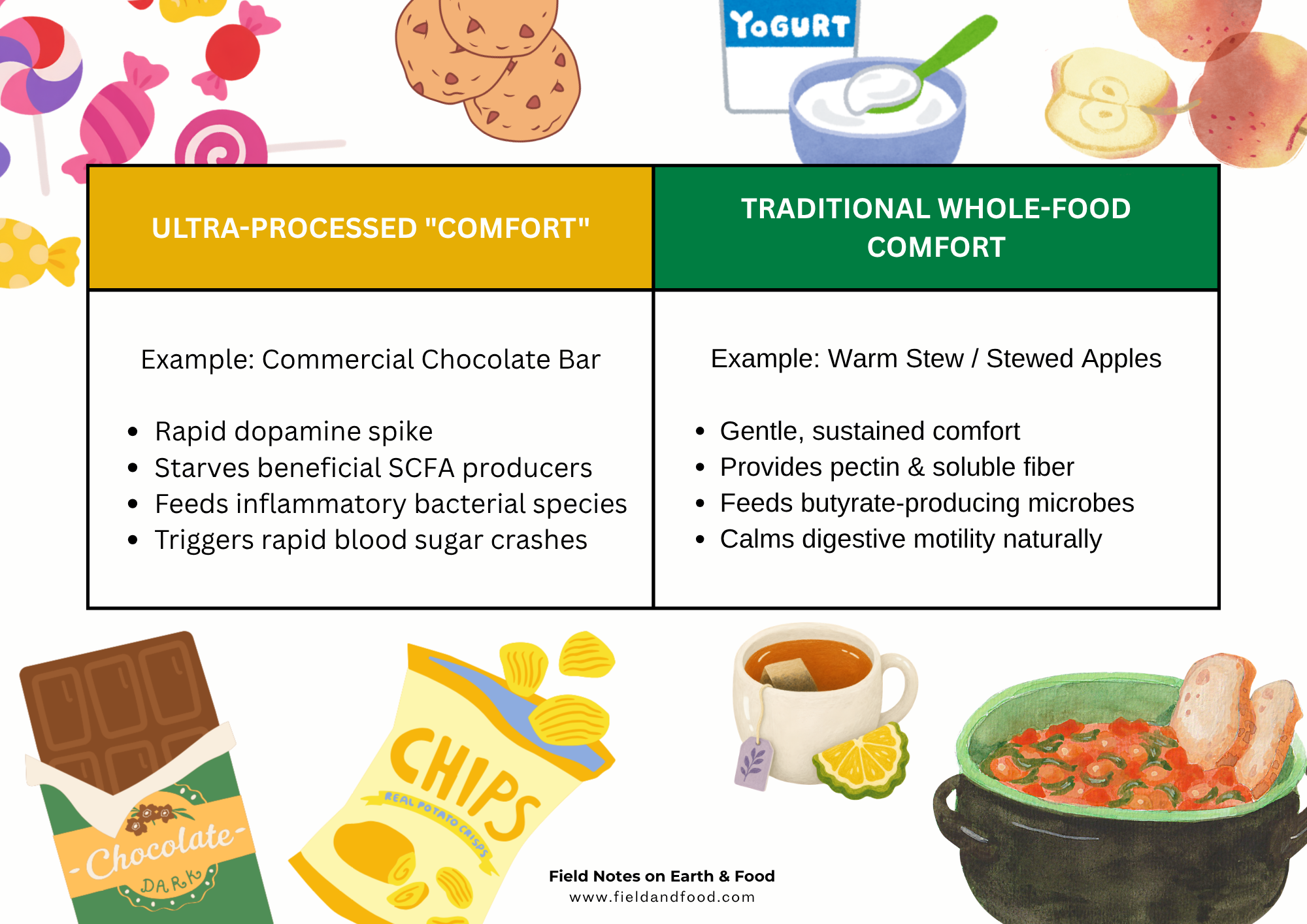
A commercial chocolate bar delivers a hit of sugar that feeds inflammatory bacterial strains and degrades gut mucus, leading to a blood sugar crash that triggers more cortisol release a short time later.
In contrast, traditional comfort foods—like a warm bowl of homemade applesauce cooked with cinnamon—provide gentle warmth and emotional comfort while simultaneously nourishing your gut. The pectin in cooked apples acts as a prebiotic fiber that feeds beneficial microbes, offering biological support alongside psychological comfort.
Everyday Digestive Symptoms: The Common Origin
During periods of high stress, many people experience everyday digestive symptoms:
- Bloating and Gas: Altered microbial fermentation speeds or slows down gas production.
- Functional Motility Changes: Adrenaline can either speed up transit time (causing loose stools) or freeze motility altogether (causing sluggishness and constipation).
- Altered Nutrient Absorption: Reduced blood flow to the digestive tract impairs the gut's ability to efficiently break down and absorb vitamins and minerals.
Rather than indicating a severe disease, these symptoms often share a single, common origin: a temporary mismatch between a nervous system in threat mode and a digestive tract trying to process food.
Manageable Dietary Support for High-Stress Periods
When your nervous system is overtaxed, forcing yourself to eat raw, complex salads can actually overwhelm a sensitive gut. Instead, the goal during high-stress times is ease, warmth, and gentle barrier support:
1. Prioritize Easily Digestible, Warm Meals
Warm, cooked foods require far less mechanical and enzymatic work for your body to break down:
- Stewed Apples with Cinnamon: Rich in cooked pectin that soothes the gut lining.
- Simple Rice & Red Lentil Kitchari: A classic, gently spiced one-pot dish that provides easy-to-absorb protein and carbohydrates without straining digestion.
- A Soothing Root Vegetable Puree: Blended carrots, sweet potatoes, or pumpkin cooked in a warm broth offer gentle soluble fiber that is exceptionally easy on a sensitive stomach.
2. The Power of Simple Ferments
Include small, daily doses of living foods—such as a spoon of sauerkraut juice, a few tablespoons of plain kefir, or natural yogurt—to continually introduce live, friendly microorganisms.
3. The Psyllium & Omega-3 Combination
Two accessible supplements can offer profound structural support during stressful periods:
- Psyllium Husk: A gentle, mucilaginous soluble fiber that absorbs water to form a soft gel in the digestive tract. It regulates transit time (whether too fast or too slow) and provides a steady fuel source for butyrate-producing microbes.
- Omega-3 Fatty Acids: High-quality EPA and DHA support the structural integrity of cell membranes and help tame localized low-grade inflammation in the gut wall.
When taken together, psyllium husk provides the prebiotic substrate while omega-3s support barrier health—creating a low-stress foundation for a struggling gut.

Non-Dietary Practices: Regulating the System
Nourishing the gut during stressful times goes far beyond the dinner plate. Because the vagus nerve is a two-way street, you can use physical practices to send calming signals back down to your internal microbes:
1. Breathwork & Singing (Vagus Nerve Activation)
The vagus nerve passes directly through the muscles of your throat and vocal cords.
- Singing: Hum, chant, or sing—even just in the shower or during your morning routine. The physical vibrations in your larynx directly stimulate the vagus nerve, signaling your nervous system to shift into a parasympathetic ("rest and digest") state.
- Extended Exhales: Taking deep breaths where the exhale is twice as long as the inhale instantly lowers heart rate and reduces circulating adrenaline.
2. Sleep Hygiene: The 8.5-Hour Buffer
Your microbiome follows its own circadian rhythm. To give your microbes time to repair:
- If you aim for 8 hours of sleep, get into bed 8.5 hours before your alarm.
- Dim the lights, leave screens outside the bedroom, and read a physical book in soft light. Even reading just a few paragraphs shifts your brain away from daily worries, preparing your body for deep, restorative sleep.
3. Nature Movement vs. High-Intensity Workouts
While staying active at work or lifting heavy weights can ground you, movement in natural spaces—such as tending a garden, walking through a local park, or strolling through a forest—has a measurably deeper impact on reducing cortisol levels than indoor gym workouts. Surrounding yourself with natural greenery lowers stress hormones and creates the biological conditions your gut needs to heal.
The Road Ahead
While we cannot always control external stressors—a difficult work environment, personal conflicts, or daily responsibilities—we can build a resilient internal foundation using gentle nutrition, movement, and nervous system care.
But what happens when stress ceases to be a personal, everyday challenge and becomes a matter of raw survival?
In the final installment of our three-part microbiome series, we look beyond personal wellness to examine how acute geopolitical stress, conflict, displacement, and systemic crisis impact the human microbiome—and what it means for long-term health.