Liquid Gold: The Science, Satiety, and Health of Real Honey
Revered as an ancient elixir, real honey is far more than a simple sweetener. From its unique fructose-glucose ratio to its antimicrobial enzyme activity, explore the biochemistry, human metabolism, and health science behind nature’s original unrefined whole food.
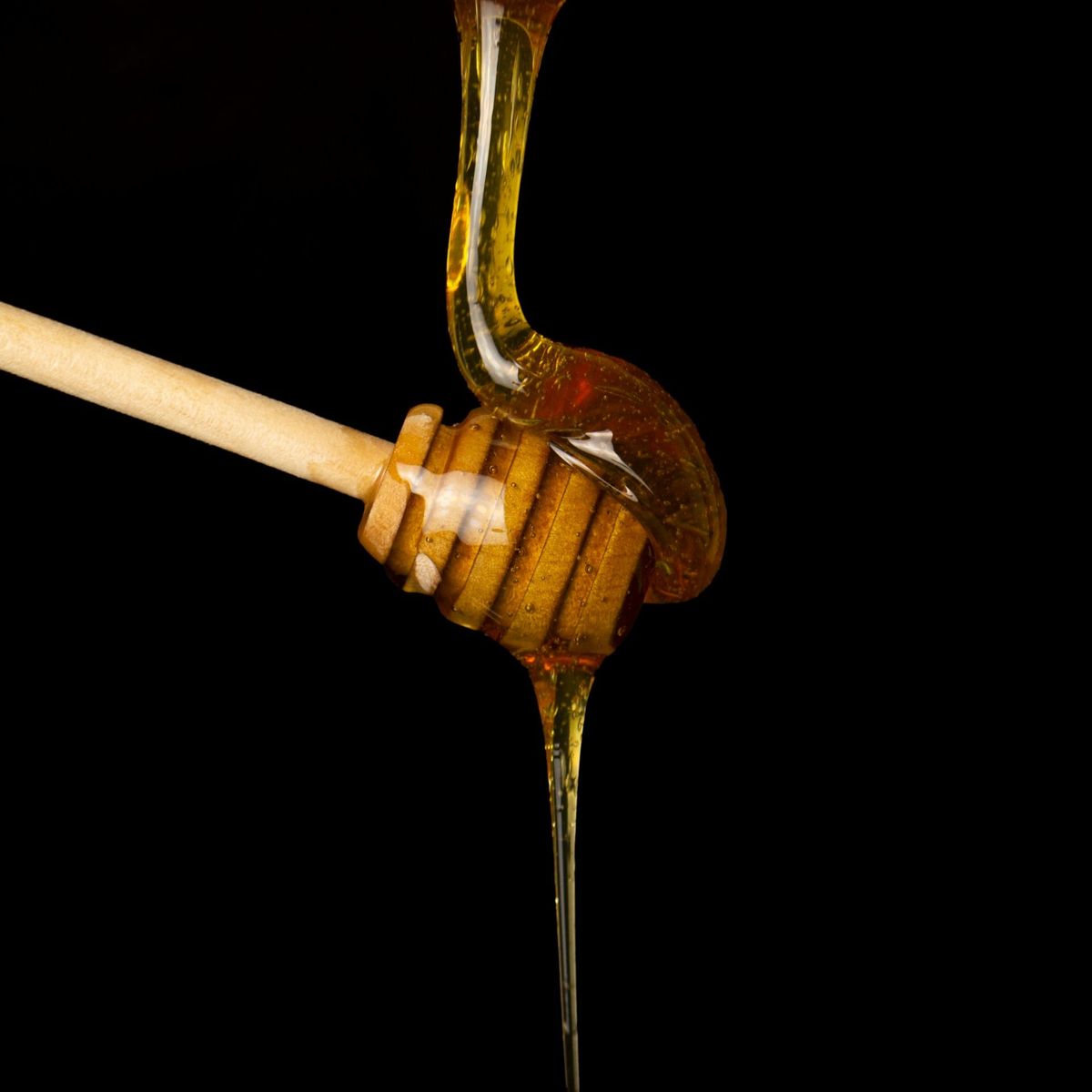
When we look at a jar of honey sitting on a kitchen counter, we are looking at a chemical marvel—and one of the most misunderstood foods in the modern kitchen.
Revered across ancient civilizations as an elixir of vitality, honey today occupies a strange double life. On one hand, it is praised as a nutrient-dense whole food and natural remedy; on the other, it is degraded into mass-produced, heavily filtered commodity syrup.
To understand the true health potential of honey, we have to look past the clear plastic squeeze-bear at the supermarket and explore the biochemistry, human metabolism, and culinary history behind nature’s original unrefined sweetener.
Deep Roots: History’s Indestructible Elixir
Humans have been gathering honey for at least 8,000 years. Prehistoric cave paintings in Cuevas de la Araña near Valencia, Spain, depict early humans scaling cliff faces with baskets to harvest wild comb from rock crevices.
In Ancient Egypt, honey was far more than food—it served as currency, a divine offering, and a foundation for medicinal ointments. When archaeologists excavated 3,000-year-old tombs in the pyramids of Giza, they discovered sealed jars of honey that were still entirely edible. Honey preserves itself indefinitely due to its naturally low moisture content (usually under 18%) and acidic pH (around 3.9), creating an environment where bacteria and spoilage organisms simply cannot grow.
Why has honey retained its status as "liquid gold" across millennia while ancient sweeteners like boiled grape syrup or palm syrup faded into obscurity?
Beyond its self-preserving nature, honey requires zero industrial refinement or chemical processing to enjoy. A person eating raw honeycomb thousands of years ago consumed fundamentally the same whole product that you get from a local apiary (bee yard) today.
Defining Real Honey and the Sugar-Water Debate
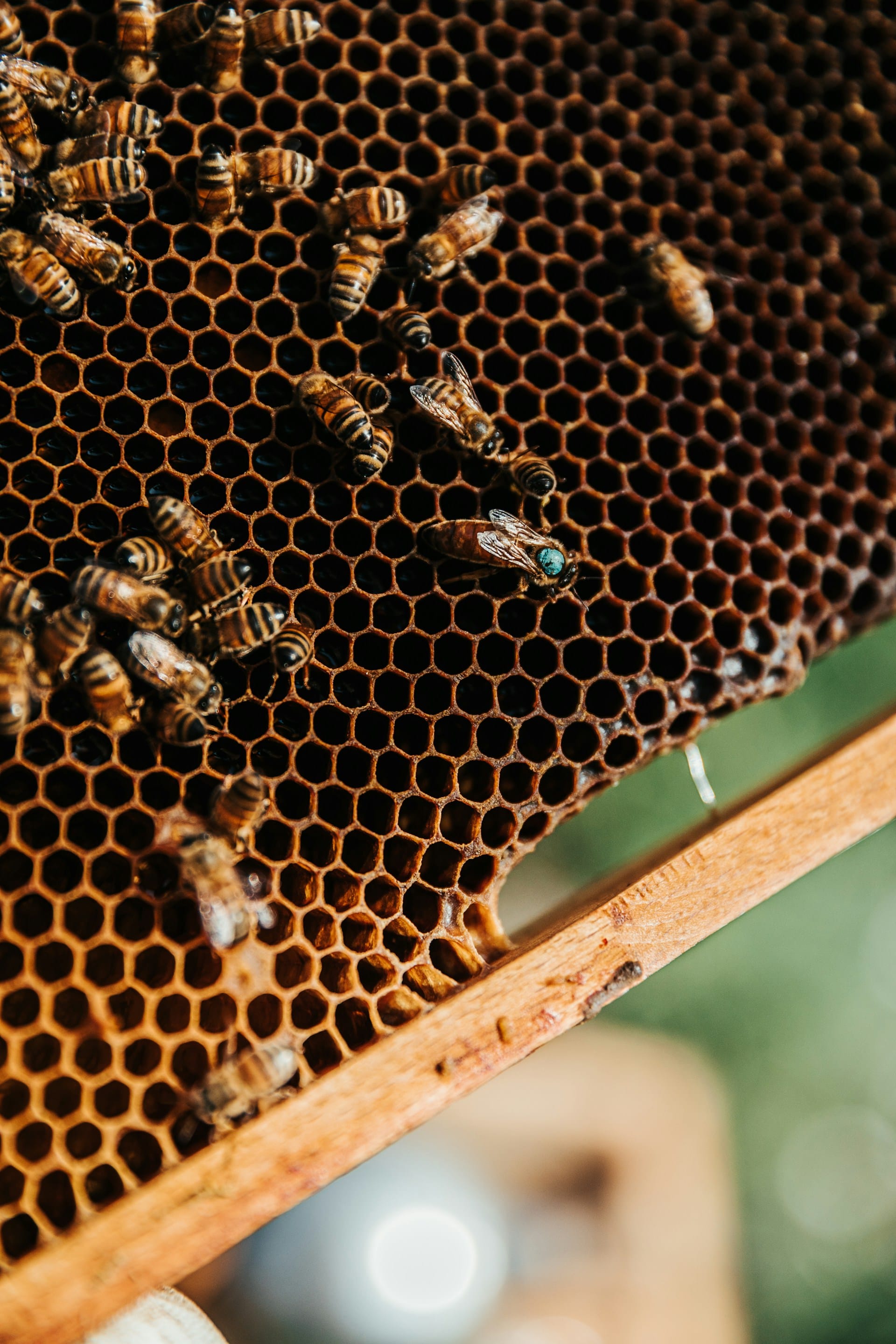
Under international food standards (Codex Alimentarius) and European Union regulations, pure honey is defined strictly as the natural sweet substance produced by Apis mellifera bees from floral nectar or plant secretions. Bees collect this nectar, transform it using their own digestive enzymes, deposit it in honeycomb, and evaporate the moisture until it ripens.
If anything is added to or removed from that process, it legally ceases to be pure honey.
The Problem of Food Fraud
Honey is currently the third most adulterated food product in the world, trailing only olive oil and milk.
Commercial "ultra-filtered" honey is often heated to high temperatures and forced through micro-fine filters under pressure. While manufacturers claim this prevents crystallization and creates a crystal-clear product, it strips away all microscopic pollen grains. Without pollen, laboratories cannot trace where the honey came from, allowing cheap, imported syrups to be blended in undetected or disguised as premium local honey.
Is Feeding Bees Sugar Water Adulteration?
During freezing winter months when flowers are absent, ethical beekeepers feed their colonies simple sugar syrup to prevent the hive from starving. This is responsible colony care.
However, if sugar water is provided during the active spring and summer harvest season while honey collection boxes are on the hive, bees will store that sucrose syrup directly into the honeycomb alongside natural nectar. While not a chemical additive, this dilutes the natural power of the honey. Laboratory testing shows that honey produced during supplemental summer feeding contains significantly lower enzyme activity and fewer beneficial antioxidants than 100% forage-derived honey.
The Metabolic Science: Why Honey Doesn't Cause a Sugar Crash
Refined table sugar (pure sucrose) or high-fructose corn syrup provides empty calories that enter the bloodstream rapidly. This triggers a sharp spike in blood glucose, followed by a surge of insulin and an inevitable "sugar crash" that stimulates hunger hormones like ghrelin, driving sweet cravings.
Raw honey behaves differently in the body:
- Balanced Sugar Matrix: Honey is primarily a natural blend of two simple sugars: fructose (~38%) and glucose (~31%). Because fructose is metabolized more slowly by the liver while glucose provides immediate energy, the combination delivers a steady, sustained release of fuel rather than a sharp spike.
- Lower Glycemic Impact: Thanks to its organic acids, trace minerals, and natural enzyme complexity, raw honey generally has a lower glycemic index (GI) than refined white sugar. The average GI of honey is about 55±5, compared to a GI of about 68±5 for white sugar.
- Brain Satiety: The rich aromatic compounds, trace minerals, and natural acids in raw honey signal sensory completeness to the brain's satiety centers. A single teaspoon satisfies a sweet tooth without triggering the urge to over consume.
The Cretan Metabolic Secret
On the island of Crete, a staple traditional snack consists of raw thyme honey drizzled over thick, full-fat cultured sheep or goat’s milk yogurt.
This isn't just delicious—it is a brilliant functional pairing. The healthy fats and proteins in cultured dairy significantly slow down gastric emptying. This flattens the blood sugar curve even further, allowing the bioactive compounds in the honey to be absorbed gradually alongside beneficial probiotics.
Bioactive Power: How Honey Fights Bacteria and Protects Health
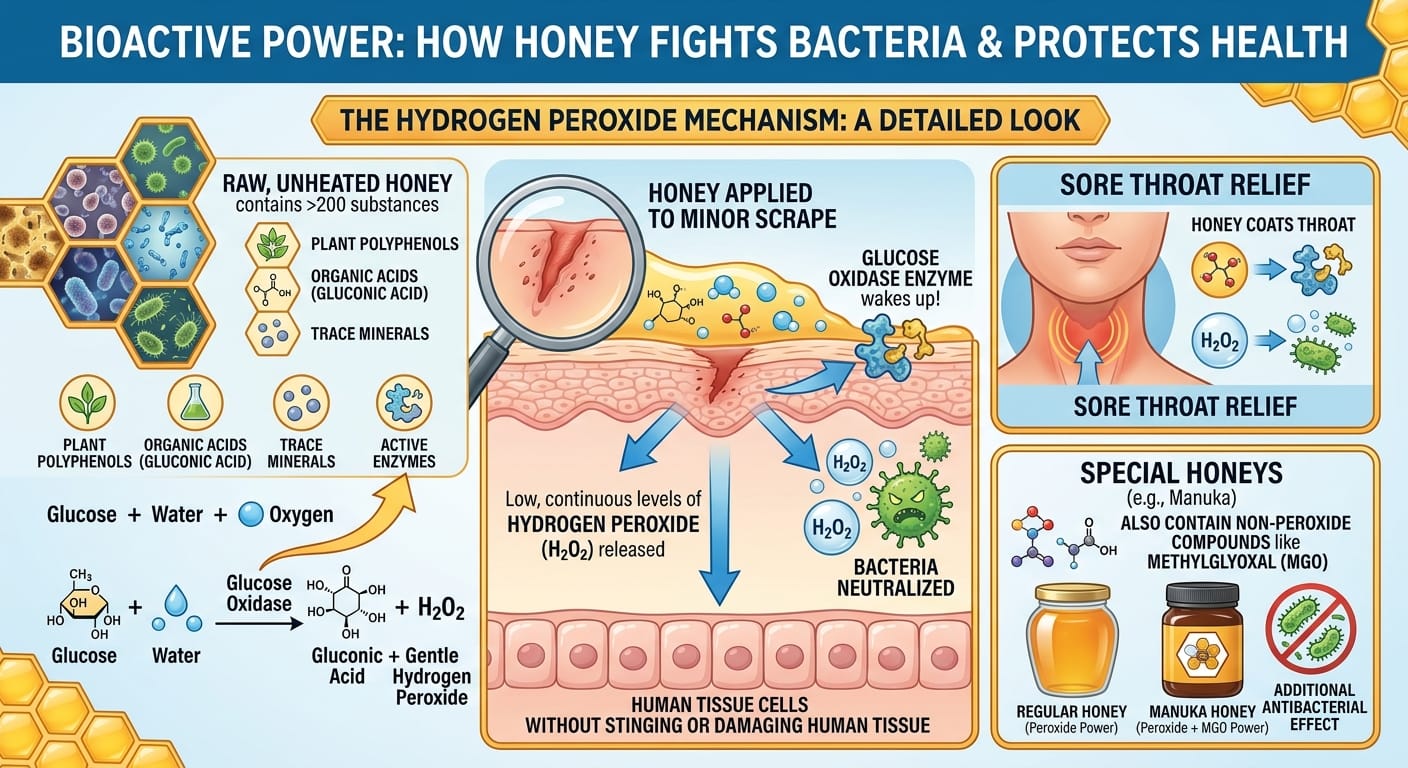
Raw, unheated honey contains over 200 distinct natural substances, including plant polyphenols, organic acids (like gluconic acid), trace minerals, and active enzymes.
The Hydrogen Peroxide Mechanism
When raw honey comes into contact with body fluids (such as on a minor scrape or sore throat), a bee-derived enzyme called glucose oxidase wakes up. It slowly breaks down glucose to release low, continuous levels of hydrogen peroxide—enough to neutralize bad bacteria without stinging or damaging human tissue. Special honeys, like Manuka, also contain non-peroxide antibacterial compounds like methylglyoxal (MGO).
What the Science & European Regulations Say
Under European Union food safety rules (EFSA), commercial honey labels on supermarket shelves are not permitted to make sweeping health claims like "cures infections."
However, clinical research and pediatric guidelines widely support specific functional uses:
- Cough Demulcent: Clinical trials show that a spoonful of raw honey before bed calms cough reflexes and soothes inflamed throat tissue in adults and children over 1 year old better than many over-the-counter syrup placebos.
- Prebiotic Support: Honey contains non-digestible oligosaccharides—complex natural sugars that nourish beneficial Bifidobacteria and Lactobacilli in the human gut microbiome.
- Topical Wound Care: Sterile, medical-grade honey dressings are routinely used in clinical settings to promote healing in minor burns, ulcers, and abrasions.
Why Extract Honey? The Comb vs. Liquid
If raw honeycomb is the purest form of honey, why isn't all honey sold as cut chunks of comb?
- Bees Work Hard for Wax: To produce just 28 grams (about 1 ounce) of beeswax, worker bees must consume roughly 227 grams (about 8 ounces) of honey. When a beekeeper uses a gentle spinner (centrifuge) to extract liquid honey from intact wax comb, those empty comb frames can be placed right back into the hive. This saves the colony thousands of hours of energy, allowing them to focus on brood care and collecting nectar rather than rebuilding wax structures from scratch.
- Kitchen Versatility: Liquid honey is far easier to measure, pour, and integrate into daily dressings, marinades, and beverages than chewy wax frames.

3 Simple Daily Wellness Rituals
To preserve the active enzymes and beneficial compounds in raw honey, never expose it to high heat. Temperatures above 40°C (104°F) begin to denature its delicate proteins and enzymes.
- A Gut-Friendly Dressing: Whisk 1 teaspoon of raw wildflower or thyme honey with extra virgin olive oil, fresh lemon juice, and a pinch of sea salt for a digestive dressing over bitter greens.
- Post-Workout Recovery Bowl: Layer high protein Greek yogurt or Skyr with raw walnuts, a dusting of Ceylon cinnamon, and a warm spoon of raw dark honey to replenish liver glycogen and support muscle recovery.
- Soothing Lukewarm Tonic: Brew a mug of fresh ginger or chamomile tea and let it cool until it is comfortably warm to the touch (lukewarm) before stirring in 1 tablespoon of raw honey and fresh lemon juice.
What's Your Favorite Way to Enjoy Real Honey?
Do you have a daily honey ritual, or a trusted local beekeeper you buy from in your area? Share your favorite honey pairings in the comments below!
Want to learn how the landscape, climate, and bee species shape the flavor and ecology behind every jar? Read Part 2 of our series: Terroir, Bees, and the Future of the Hive.
Sources
Codex Alimentarius Standard for Honey (CXS 12-1981): Official international food standards defining pure honey, compositional criteria, and restrictions on additives.
Codex Alimentarius – Standard for Honey
European Commission / EU Food Safety & Honey Regulations: EU Council Directive 2001/110/EC relating to honey definition, labelling standards, and health claim regulations (EFSA framework).
European Commission – Honey Policy & Standards
Food and Agriculture Organization (FAO) – Honey Authenticity & Adulteration: Overview of honey supply chain integrity, C3/C4 sugar adulteration testing, and ultra-filtration issues.
FAO – Value-Added Products From Beekeeping
Journal of Medicinal Food / NCBI PubMed: Review on the glycemic index of honey, carbohydrate composition (fructose/glucose ratio), and metabolic satiety signaling.
NCBI PubMed – Glycemic Index and Metabolic Effects of Honey
American Academy of Pediatrics (AAP) & Cochrane Library: Clinical evidence on raw honey as a natural demulcent for acute cough suppression in children over 1 year of age.
Cochrane Database – Honey for Acute Cough in Children
University of Arizona Cooperative Extension (CALS): Energy expenditure of bees, beeswax production mechanics, and comb extraction efficiency.
University of Arizona CALS – Backyard Beekeeping & Honey Production